Weight Plates UK: Bumper vs Iron and What to Actually Buy (2026)

Plates are where a lot of home gym budgets get wasted. People buy the cheapest cast iron they can find, then discover they can't drop them, they chip the floor, the sizing is off, and the bar won't load cleanly. The right plates do the opposite — they take a drop, protect your floor and bar, sit true on the sleeve and last a lifetime.
This guide makes the choice simple. We'll explain bumper vs cast iron vs urethane, what the numbers actually mean, and which set to buy for the way you train — so you load the bar once and never think about it again.
Bumper, cast iron or urethane — start here
There are three plate types worth your money, and the right one depends mostly on whether you drop the bar.
Rubber bumper plates — the home-gym default
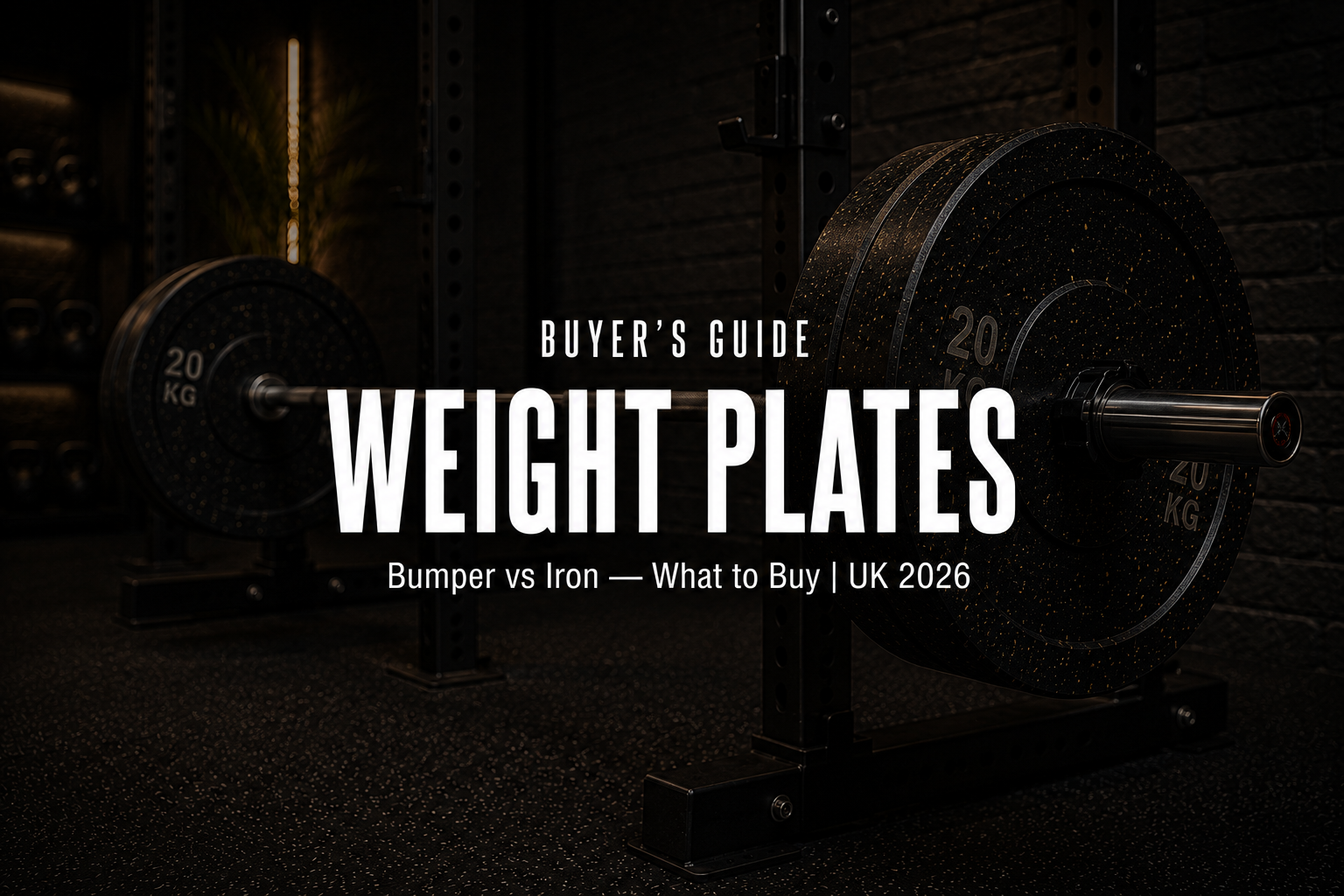
Bumper plates are full rubber, all the same diameter regardless of weight, and built to be dropped from overhead without damaging themselves, the bar or the floor. For Olympic lifts, deadlifts and anyone training alone who needs to bail safely, they're the obvious choice — and the reason they're standard in nearly every serious home gym.
The JORDAN HG Black Rubber Bumper Set (around £672 for a 2×5/10/15/20/25kg set, 150kg total) is our default recommendation — a complete, droppable set that covers most training out of the box. For a fuller rubber set, the JORDAN Classic Rubber Olympic Set (from around £843.60) extends the range.
Urethane plates — the premium, hard-wearing upgrade
Urethane is the commercial-grade step up from rubber: tougher, more resistant to chipping and smell, and it keeps its finish far longer under heavy daily use. It's what high-end gyms specify because it simply outlasts rubber.
The JORDAN Classic Urethane Olympic Set (from around £739.20) gives that durability, and the Dual-Grip Urethane Set (from around £1,050) adds moulded handles that make plates easy to carry and use for loaded carries and accessory work. If you want buy-it-once and train hard, urethane is the premium pick.
Cast iron — compact and traditional
Cast iron plates are dense, so they're smaller in diameter for the same weight — handy if storage is tight or you mostly do controlled lifts rather than dropping the bar. The catch: they're not made to be dropped, and bare iron can chip and mark your floor.
The JORDAN Deep Dish Cast Iron Set (from around £840) is a quality machined option with dished centres for easier handling. Best for fixed-bar pressing and controlled work — pair with rubber flooring and don't drop them.
What the numbers actually mean
A few specs separate a good set from a frustrating one:
Olympic (50mm) bore. Home barbells use 50mm sleeves, so you want Olympic plates. Standard (1-inch) plates won't fit a proper Olympic bar — check the bore before buying.
Accuracy / calibration. Cheap plates can be several percent out, so "20kg" isn't really 20kg. That matters if you track loads precisely. Calibrated competition plates are machined to tight tolerances — the JORDAN Calibrated Colour Rubber Competition Set (around £1,140) and the Urethane Competition Set (around £1,350) are for lifters who want exact, true weights.
Thinness and loadability. Denser, thinner plates let you fit more total weight on the bar — important once you're loading 150kg-plus and want it all on the sleeve.
Insert quality. A steel-collared centre stops the bore wallowing out over years of loading. It's the difference between plates that stay tight on the sleeve and ones that rattle.
How much weight do you need?
Don't over-buy on day one, but leave room to grow:
A starting set of around 100–150kg covers most people for squats, presses, rows and deadlifts with room to progress. The 150kg bumper set above is a sensible, complete starting point.
Buy pairs you'll grow into. It's cheaper to buy a graded set once than to top up a kilo at a time later. Stronger lifters should plan for heavier plates from the start.
Match plates to your bar and rack. Plates, bar and rack work as a system — see our best barbells guide for choosing the bar that carries them and our best power rack guide for the frame around it.
Storing plates properly
Loose plates on the floor get damaged, damage your floor, and make the room a hazard. A plate rack or tree keeps them off the ground, sorted by size and easy to load — and protects the investment. Budget for storage alongside the plates; it pays for itself in floor space and tidiness.
For how plates fit the whole build — bar, rack, bench and flooring in the right order — see our complete strength equipment guide.
Frequently asked questions
Bumper plates or cast iron — which is better for a home gym? Bumper plates are better for most home gyms because they can be dropped safely, protect your bar and floor, and suit Olympic lifts and solo deadlifts. Cast iron is more compact for the same weight and fine for controlled pressing, but it can't be dropped and can mark your floor. Most home gyms should start with bumpers.
What's the difference between rubber and urethane plates? Both are droppable and floor-friendly. Urethane is the commercial-grade upgrade — tougher, more resistant to chipping and odour, and it holds its finish far longer under heavy daily use. Rubber is the excellent-value default; urethane is the premium buy-it-once choice for hard, frequent training.
What size weight plates do I need? You need Olympic (50mm bore) plates to fit a standard home barbell. A starting set of around 100–150kg covers most training with room to progress; stronger lifters should plan for heavier from the start. Buy a graded set you'll grow into rather than topping up a plate at a time.
Are calibrated plates worth it? For most home training, standard quality plates are fine. Calibrated competition plates are machined to exact tolerances so the weight is precisely true — worth it if you track loads closely, train for competition, or want every plate to weigh exactly what it says.
Can I drop bumper plates on any floor? Bumper plates are made to be dropped, but you still need proper rubber flooring underneath to protect the subfloor and cushion the impact. Never drop cast iron plates — they're not built for it and can chip and crack your floor.
The bottom line
Plates are a buy-it-once purchase if you choose well. Go bumpers for droppable, all-round home training; step up to urethane for commercial-grade durability; keep cast iron for compact, controlled lifting. Make sure they're Olympic-bore, buy a graded set you'll grow into, and store them on a rack. Get it right and you load the bar for years without a second thought.
Browse the full weight plate range to compare sets and storage, or see the wider strength equipment range. Not sure how much to buy or which type suits your training? Get in touch — we'll help you spec it right first time.
Pro Gym Essentials — premium home and commercial gym equipment, delivered across the UK.

- Opens in a new window.