Curved Treadmill UK: Are They Worth the Money? (2026)

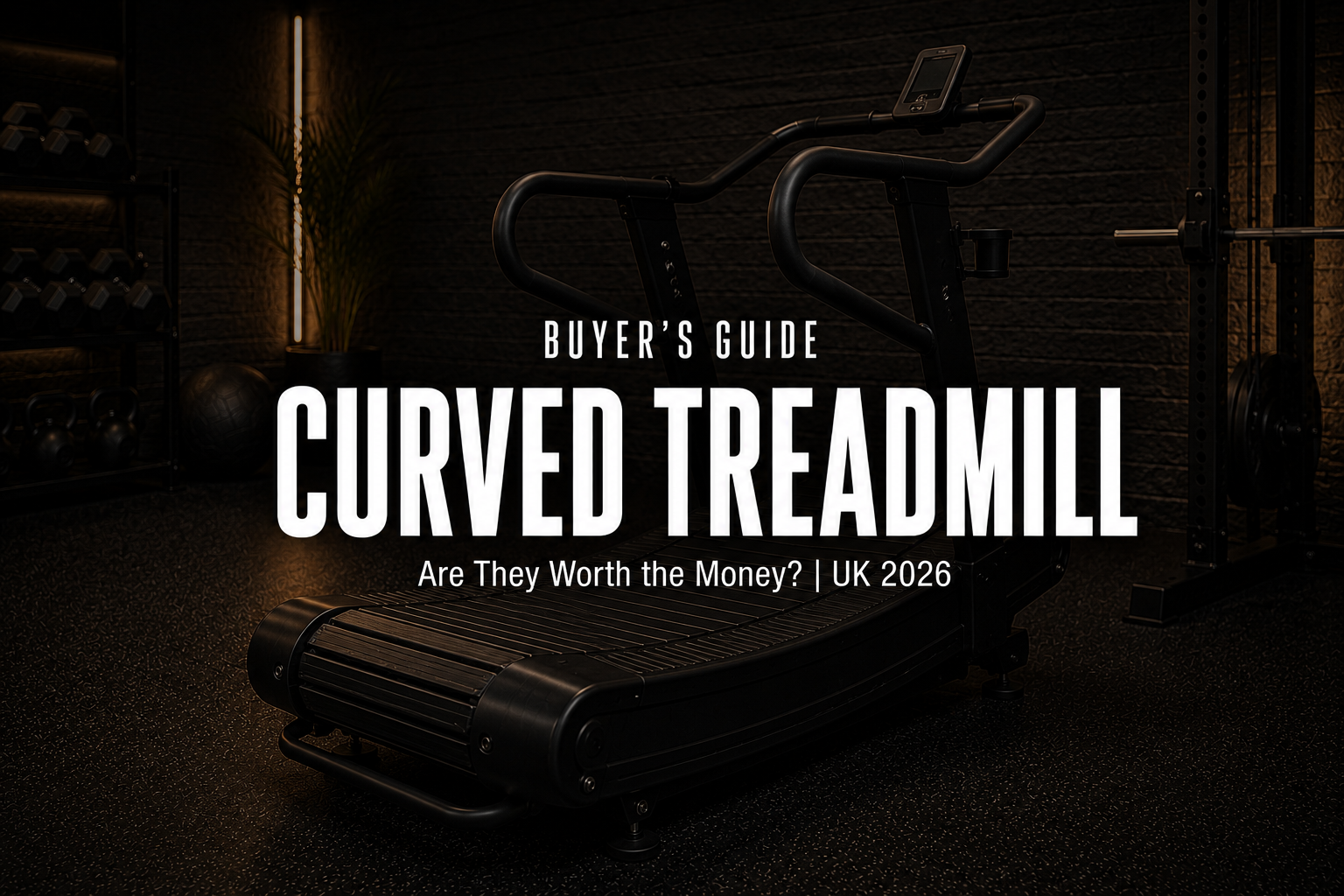
Curved treadmills look different, cost more than a standard machine, and split opinion. If you've seen one in a gym — that big manual curve with no motor — and wondered whether it's worth the premium for a home setup, this is the honest answer. They're a brilliant tool for the right person and overkill for the wrong one.
This guide explains exactly how a curved treadmill works, what it does better than a motorised machine, where the trade-offs are, and who should actually buy one. By the end you'll know if it's the right cardio piece for you.
How a curved treadmill works
The key difference is simple: there's no motor. A standard treadmill has a belt driven by a motor, and you keep up with it. A curved treadmill has no motor at all — you drive the belt with your own feet.
The curved, slatted running surface is the trick. You step onto the upper part of the curve and your stride pushes the belt backwards; to slow down, you move toward the centre; to stop, you simply stop running. Speed is entirely controlled by where you position yourself and how hard you run. The machine does nothing — you power every step.
That changes everything about how it feels and what it gives you.
What a curved treadmill does better
Powering the belt yourself has real benefits:
A harder workout for the same time. Because you're driving the belt, running on a curve burns significantly more energy than the same pace on a motorised machine — often around 30% more. You work harder without trying to.
More natural running mechanics. The curve encourages a forefoot strike and proper running form. It rewards good technique and gently exposes bad habits, which can make you a better runner.
True self-pacing for intervals. Speed responds instantly to your effort — no buttons, no waiting for the motor to catch up. Sprint, ease off, sprint again, all controlled by your legs. That makes it superb for HIIT and sprint work.
No speed limit and no motor to break. You can sprint as fast as you can run, and there's no motor to wear out, service or replace — a big durability advantage over the life of the machine.
Lower long-term maintenance. No motor means one of the most common treadmill failure points simply doesn't exist.
The trade-offs to know
It's not the right machine for everyone. Be honest about these:
It's harder — which cuts both ways. Brilliant if you want intensity; tough if you want a gentle walk or easy recovery jog. Curved treadmills suit people who want to work, not stroll.
A learning curve. The self-powered feel takes a few sessions to get used to. It feels strange at first before it clicks.
Higher up-front cost. A quality curved treadmill is a premium purchase, more than many motorised machines. You're paying for commercial build and a motor-free design that lasts.
Size and weight. These are substantial, heavy machines — they're built like commercial kit. Make sure you've got the space and floor for one.
Who should buy a curved treadmill?
Here's the honest split:
Buy a curved treadmill if you're a runner or athlete who wants intensity, better running mechanics, sprint and interval training, and a machine that'll last for years with no motor to fail. For serious conditioning and running performance, nothing motorised matches it.
Stick with a motorised treadmill if you mainly want steady walking, easy jogging, incline work, or a gentler machine the whole household will use. We cover those in our best treadmill guide.
If you're still weighing treadmill against bike, rower or other cardio, our best cardio machine guide puts them side by side.
Which curved treadmill?
For a home gym that takes serious running and conditioning, the Attack Fitness Run Attack Curved Treadmill (around £4,320) is a commercial-grade, self-powered machine built to replicate natural running and take years of hard use.
If you want to add a strength-and-sled element, the Run Attack Curved Treadmill with Resistance (around £4,470) adds adjustable magnetic resistance for sled-push-style and power work — turning the treadmill into a conditioning tool as well as a runner.
Both are commercial builds designed for the demands of self-powered running.
Setting it up
Give it a solid, level floor. These are heavy machines — rubber flooring protects the floor and keeps it stable. Allow clearance. Leave room around and behind it to mount, dismount and run safely. Ease in. Spend your first few sessions getting used to the self-powered feel before going all-out. Pair it with strength. A curved treadmill is a superb conditioning complement to a strength setup — see how cardio fits the wider build in our complete home gym setup guide.
Frequently asked questions
Are curved treadmills worth it? For runners and athletes who want intensity, better running form and a machine with no motor to fail, yes — a curved treadmill is worth the premium. For gentle walking or easy jogging, a motorised treadmill is more comfortable and cheaper. Match the machine to how you'll actually train.
Why are curved treadmills harder? Because you power the belt with your own feet instead of a motor driving it. Running on the curve burns significantly more energy — often around 30% more than the same pace on a motorised treadmill — so you work harder for the same time without changing your effort consciously.
Do curved treadmills need power? No — that's the point. A curved treadmill has no motor and needs no electricity to run. You drive the belt yourself. Some models add powered consoles or magnetic resistance, but the running surface itself is entirely self-powered.
Are curved treadmills better for your knees? Many runners find the curved surface encourages a more natural forefoot strike and absorbs impact well, which can feel easier on the joints than hard road running. As with any machine, good technique and easing in matter — but the mechanics are designed to reward natural running form.
Can you walk on a curved treadmill? You can, but they're designed for running and high-intensity work, and walking feels less natural than on a motorised machine. If gentle walking is your main use, a motorised treadmill is the better, more comfortable choice.
The bottom line
A curved treadmill is a premium tool for people who want to work: harder sessions, better running mechanics, instant interval control and no motor to fail. If that's you, it's worth every penny and lasts for years. If you mainly want easy walking or a gentle jog, a motorised treadmill makes more sense. Buy for how you'll actually train.
Browse the curved treadmill range to compare, or see the wider cardio range for motorised treadmills, bikes and rowers. Not sure which treadmill suits your training? Get in touch — we'll help you choose right first time.
Pro Gym Essentials — premium home and commercial gym equipment, delivered across the UK.
- Opens in a new window.